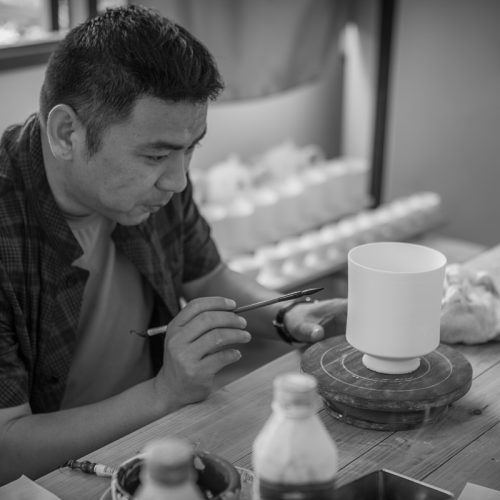
“AS FAIR AS SPRING”
A Rare Collection of Hand-Painted Masterpieces Porcelain Teacups by Award-Winning Artist Zimo Wang
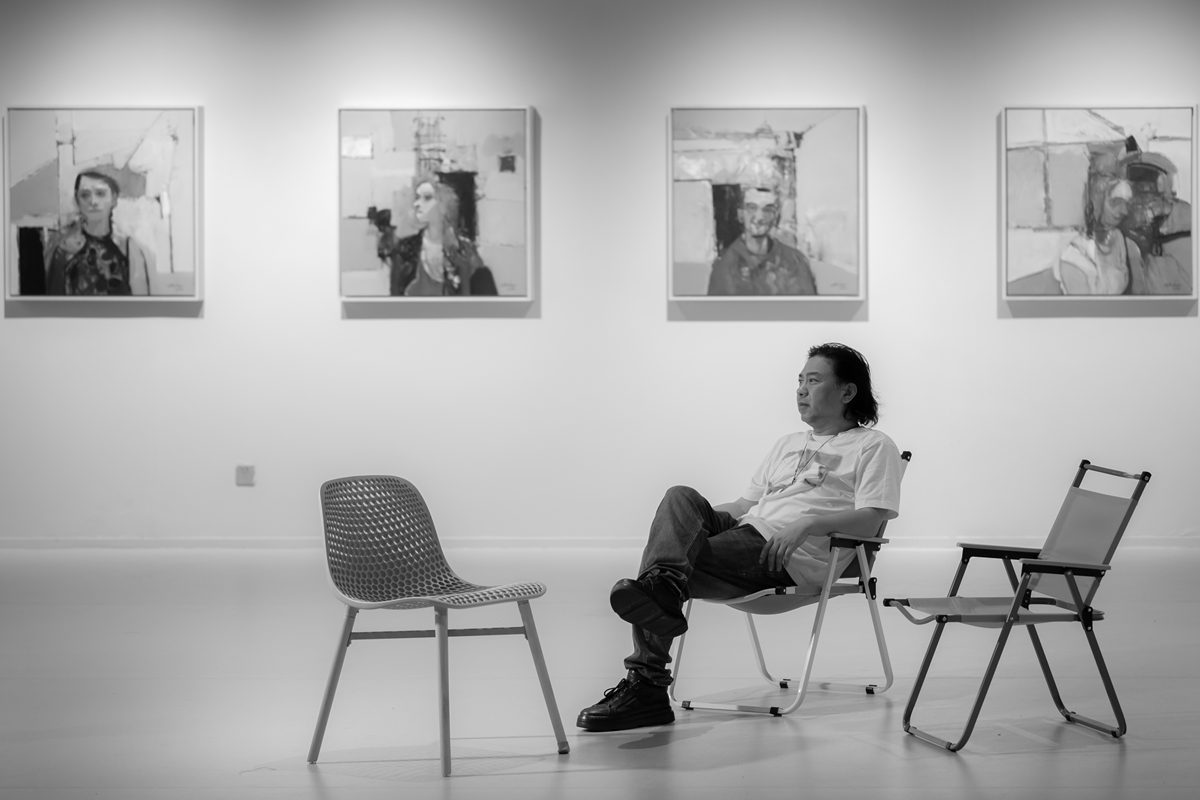
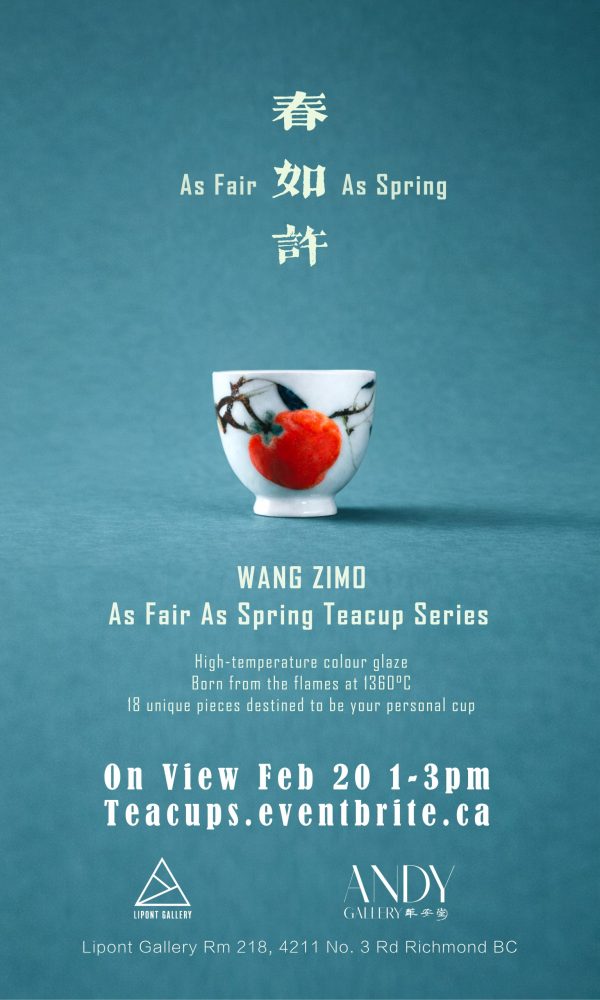
In celebration of the Lunar New Year, Lipont Gallery, in partnership with ANDY Gallery Shanghai, is proud to announce, “AS FAIR AS SPRING” (春如许), a showcase and sale of 18 unique, hand-painted teacups by renowned artist Zimo Wang.
This event, taking place on Friday, February 20th 1-3pm, offers collectors a rare opportunity to purchase functional art that bridges the gap between ancient Chinese tradition and contemporary Western modernism.
Date & Time: Friday, February 20th, 2026 1:00 PM – 3:00 PM
Location: Lipont Gallery, Rm 218 (no elevator), 4211 No. 3 Road, Richmond, BC
Admission: Free (Registration required) https://teacups.eventbrite.ca
Parking: free parking on South Side of the building only.
The Alchemy of 1,360°C: Highlights & Key Facts
Each teacup in this collection is a One-of-a-Kind (OOAK) masterpiece, resulting from a meticulous 50-day production process in the world’s porcelain capital, Jingdezhen, China.
- Artistic Pedigree: Zimo Wang is a gold medalist (2021 China International Ceramic Art Exhibition) whose work is collected by the Long Museum, UCCA, and HSBC.
- Symbolism & Meaning: Under the theme “Springtime Splendor,” the motifs carry deep cultural blessings:
- Pomegranates: Abundant blessings and family.
- Lotus: Harmony and wealth.
- Persimmons: Smooth success in all matters (Shi Shi Ru Yi柿柿如意).
- The Process: Each cup is hand-thrown using Jingdezhen high-white kaolin clay, bisque-fired, hand-painted with high-temperature glazes, and fired in a gas kiln at 1,360°C.
- The “Kiln Change”: Unlike paper, porcelain art is finished by “luck and fire.” The extreme heat causes the glazes to undergo a “kiln transformation,” ensuring no two cups—even with similar themes—are ever identical.
- Safety & Utility: These cups are 100% lead-free, non-toxic, and safe for daily use, designed to be “refined objects” that elevate the ritual of tea drinking.
A Fusion of East and West
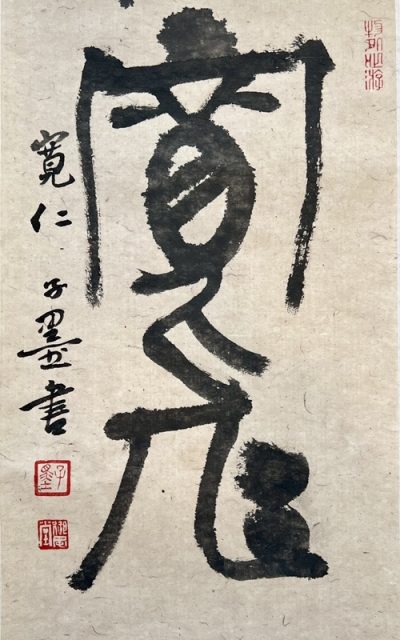
Zimo Wang’s style is a sophisticated dialogue between two worlds. While his brushwork is rooted in traditional Chinese calligraphy and Zen philosophy—viewing a single cup as a “universe in a flower”—his vibrant use of color is influenced by Western masters like Matisse and Miró.
“The teacup is a poetic transformation of daily life,” says Zimo Wang. “It is a minimalist vessel that reflects the universe and the artist’s state of mind.”
Event Details
Attendees will have the opportunity to appreciate the texture of the brushwork and see how the artwork “comes alive” when filled with tea. All 18 pieces are available for purchase and come with a Certificate of Authenticity signed by the artist.
- Date: Friday, February 20th, 2026
- Time: 1:00 PM – 3:00 PM
- Location: Lipont Gallery, Rm 218 (no elevator), 4211 No. 3 Road, Richmond, BC
- Admission: Free (Registration required) https://teacups.eventbrite.ca
- Parking: free parking on South Side of the building only.
- Contact: 604-285-9975, art@lipont.com
About ANDY Gallery
ANDY Gallery was formerly known as the Shanghai Chunfeng Art Salon, established in 1999. In 2022, it opened a new space in Zhujiajiao, Shanghai.
Renowned masters of traditional Chinese painting—including Cheng Shifa, Huang Yongyu, Liu Danzhai, and Fang Zengxian—inscribed and presented plaques for the gallery. The name Andy Gallery(华安堂) was written by Mr. Qian Juntao.
春如许:
力邦美术馆联袂华安堂艺术空间,呈献著名艺术家王子墨孤品手绘艺术杯特展
为庆祝农历新年的到来,力邦美术馆(Lipont Gallery)与上海华安堂艺术空间(ANDY Gallery Shanghai)荣幸宣布,将于2月20日星期五下午1:00时至3:00时举办【“春如许” (As Fair as Spring) 王子墨手绘茶杯特展】。本次展览将呈现18件独一无二的高温颜色釉茶杯精品,并面向收藏家开放现场认购。
这次限时品鉴会是连接中国古老传统与西方当代艺术的桥梁。每一只手绘杯不仅是艺术品,更是将“文人意趣”融入日常生活的绝佳载体。
- 日期: 2026年2月20日,星期五
- 时间: 下午 1:00 – 3:00时
- 地点: Lipont Gallery, Rm 218(无电梯), 4211 No. 3 Road, Richmond, BC
- 费用: 免费(需提前预约登记)https://teacups.eventbrite.ca 或短信/微信报名17787081582
- 停车: 仅限大楼南侧免费停车。请勿停在北侧。
1360°C的火中艺术:展览亮点与核心价值
本次展出的18件作品,每一件皆为孤品。它们诞生于中国瓷都景德镇,历经长达50天的繁复工序。
- 艺术造诣: 王子墨老师是2021年中国国际(景德镇)陶瓷艺术展金奖得主。其作品被龙美术馆(上海)、尤伦斯艺术中心(UCCA)、圣马丁艺术学院以及汇丰、渣打银行等知名机构永久收藏。
- 东方寓意: 展览以“春如许”为主题,作品多选取寓意吉祥的题材:
- 石榴: 象征多子多福,家族兴旺。
- 荷花: 象征和谐圆满,和气生财。
- 柿子: 寓意“柿柿如意”,事事顺心。
- 极致工艺: 选用景德镇特有高白泥(高岭土)拉坯,经800度素烧后,使用高温颜色釉手工绘画,最终在气窑中经受1360°C烈焰的洗礼。
- 奇妙“窑变”: 与纸本绘画不同,瓷上艺术受火的淬炼。高温导致釉料发生“窑变”,产生无穷的变化。即使主题相似,其色彩与纹理亦不可复制。
- 安全与实用:是专为提升饮茶仪式感而设计的“雅玩”之器。
艺贯中西:独特的审美风格
王子墨的艺术风格是东西方文明的深层对话。他的笔触根植于中国传统书法与禅宗哲学,秉持“一花一世界”的极简意象;而在色彩运用上,则深受马蒂斯(Matisse)与米罗(Miró)等西方现代主义大师的影响。
王子墨表示:“茶杯最初是画给自己用的,它是对日常生活的诗意转化,是将烟火气与仪式感并存于现代生活中的绝佳支点。”
活动详情
观众将有机会近距离观察釉面与绘画的交互感,感受瓷面笔触的质感。所有18件孤品均可现场购买,并附有艺术家亲笔签名的收藏证书。
- 日期: 2026年2月20日,星期五
- 时间: 下午 1:00 – 3:00时
- 地点: Lipont Gallery, Rm 218(无电梯), 4211 No. 3 Road, Richmond, BC
- 费用: 免费(需提前预约登记)https://teacups.eventbrite.ca 或短信/微信报名17787081582
- 停车: 仅限大楼南侧免费停车。请勿停在北侧。
- 联系方式:604-285-9975, art@lipont.com
关于Lipont Gallery
Lipont Gallery 是一家商业艺术画廊,位于温哥华力邦艺术港 (Lipont Place) 内。Lipont Gallery成立于2017年,致力于展示温哥华艺术家和国际艺术家的当代艺术作品,涵盖多种媒介。除了代理事业成熟的艺术家之外,画廊还为处于事业初期的优秀艺术家提供展览机会,扶持本地人才。Lipont Gallery广泛与艺术品消费者、收藏群体,艺术和教育等机构合作,扩大本地艺术社区的领域,与国际互动。
华安堂艺术空间前身为上海春风艺术沙龙,成立于1999年。于2022在上海朱家角古镇设立新空间。程十发、黄永玉、刘旦宅、方增先等国画大家分别为画廊题字留匾,钱君匋先生题写华安堂。
Wang Zimo – Artist Biography
Born in Shanghai in 1971, he graduated from the Chinese Department of Shanghai Normal University in 1994.
He once worked as an editor and reporter for Xinhua News Agency, and is now a professional calligrapher, painter and ceramist.
He studied under renowned calligraphers and painters Mr. Huang Ruozhou and Mr. Wang Yong. His works advocate the artistic conception of elegance, purity, gracefulness, antiquity and tranquility, and have been selected into national calligraphy exhibitions for many times.
In 1994, his work won the first prize in the National College Students Calligraphy Competition.
In 1997, his work was selected into the 2nd National Exhibition of New Artists; in 2001, it was included in the 5th National Exhibition of Calligraphy Works by Middle-aged and Young Calligraphers.
In 2024, his calligraphy and Chinese paintings participated in “Chinese and Western Paintings – Exhibition of A Private Collection” held at Lipont Gallery Vancouver.
In 2024, the “Wang Zimo (Calligraphy) & Cheng Wei (Ceramics) Dual Exhibition” was held in Vancouver.
In 2025, the “Endless Summer” teacup pop-up event was held in Vancouver.
He has published Aesthetics and Collection of Zimo’s Works.
His works have been collected by many art colleges, institutions and enterprises, including Shanghai Long Museum, HSBC Bank, Standard Chartered Bank, Ullens Center for Contemporary Art and Central Saint Martins College of Art and Design.
王子墨 – 艺术家简介
1971年生于上海,94年毕业于上海师范大学中文系。
曾任新华社编辑 记者,现为职业书画家、陶艺家。
师从著名书画家黄若舟先生、王镛先生。作品崇尚雅洁秀逸、古穆冲澹的意趣,作品多次入选全国书法展。
1994年作品在全国大学生书法比赛一等奖。
1997年入选《全国第二届新人展》,2001年《第五届全国中青年书法家作品展》。
2024年参加温哥华力邦美术馆《艺贯中西——私人绘画收藏集萃展》
2024年《王子墨(书法)成玮(陶艺)双人展》(温哥华)。
2025年本色画廊《无尽夏》水杯展(温哥华)。
出版有《美学》.《子墨作品集》。
作品被上海龙美术馆,汇丰银行,渣打银行、尤伦斯艺术中心,圣马丁艺术学院等多家艺术学院、机构企业收藏。
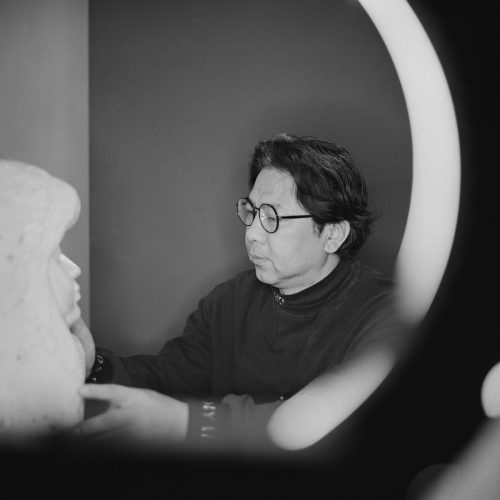
Days on Porcelain
Zi Mo Wang
I don’t remember which year it started, but I’ve visited Jingdezhen every year, sometimes even in my dreams. Is it because the soil there still retains the same rich, pure clay? Or is it because the kiln fires, burning for millennia, still carry a hint of ancient Chinese aesthetics? Perhaps it’s because there are artisans like myself, so passionate about porcelain craftsmanship…
Since my student days, I’ve dabbled in literature and art, handling and admiring countless treasures. After countless moments of fascination, picking them up, I’ve ultimately put them down. In middle age, choosing to be close to porcelain is, in essence, choosing a solidified beauty after smelting. No matter where it’s placed, it will exude a remarkable elegance, silent yet captivating.
My days in the porcelain capital allowed me to follow every moment of porcelain’s birth, experiencing firsthand its inception, budding, struggle, transformation, fragmentation, metamorphosis, and finally, its complete and perfect rebirth.
At the same time, I also reflected on myself in certain moments. Listen, sometimes the unintentional sound of porcelain, lingering and fading in the air, even the faintest echo washes over me. I see myself as an empty vessel, slowly learning to listen to emptiness, to hear the inner voice singing between presence and absence. It may carry a few impurities, yet remain simple and full; it may possess a clean, resolute strength, yet remain warm and smooth.
Porcelain inherently possesses a detached, independent spirit, quietly and purely being itself. It seems that in a certain moment of painting porcelain, I received a childlike breath and a pure heart from each other. Perhaps it is because of its existence that it guides me through the colorful, bustling, and illusory world, allowing me to silently express my attitude—a mere corner, a delicate twig, a climbing vine, a shy lotus seedpod, a handful of ripe pomegranate seeds—a turn, and I’m already beyond the canvas; or it can burst forth to express the attitude of ink wash, following the shape of the vessel, the lotus pond spreading out, crowded together, densely packed, some striking, some gentle, some serene, some lingering, only narrowing its shape inch by inch as it nears its limit, until in the distance, lotus leaves stretch to the sky, water and sky merging into one.
Each time I create a piece of porcelain, it passes through the hands of the clay worker, the kiln worker, and the painter several times, like encountering a preordained yet unintentionally blossoming love in each fleeting moment of frozen time. Every intimate interaction forces you to confront impurities and stains nakedly, forcing you to choose rebirth through fire. It turns out that the unyielding spirit and refined character are forged through enduring scorching heat, withstanding the torment of a lonely soul, bearing the weight of broken courage, and bearing the disillusionment of impermanence—forged in a desperate gamble. Waiting for the unknown finished product to emerge is like Zhang Ailing’s “Love”: In the boundless wilderness of time spanning millions of years, neither a step too early nor a step too late, just in time. And then, a soft “Oh, you were here.”
“Oh, you were here.” This is like the underlying tone of life—neither good nor bad, only harmonious blending. Form, clay, technique, color—everything is a flowing backdrop, everything arises spontaneously from the harmony of fire and temperature. Therefore, there is no expectation, no rush, only the nurturing of the inner temperature. As Heidegger said, “Every hand movement contained in every work is permeated with the element of thought; every action of the hand carries itself; all works of the hand are rooted in thought.”
Life on porcelain has become a time of quiet contemplation. I’m getting more and more used to it, carving out this space to converse with the porcelain and to talk to my heart.
瓷上的日子
/子墨
已不记得从哪一年开始的,每年都会去景德镇,有时梦里也会去。是因为,那块土壤上至今仍沉淀着一脉相承的纯厚肥泥?还是千年不灭窑火里仍能闻得到中国古代生活美学的些许气息?或许因为,有着如我一样痴情于瓷艺手作的匠人们······
从学生时代起一路舞文弄墨,也算把玩过目了不少的宝贝。在经历了无数次的痴迷,拿起,终究归于放下。人到中年,选择亲近瓷器,其实是选择一种冶炼之后的凝固美,不管将它置于何方空间,都会释放出卓越的风姿,于无声处。
在瓷都的日子,让我跟随瓷器诞生的每一个片断,近距离的感触着她的初生、萌发、挣扎、蜕变、破碎、幻化直至脱胎换骨的圆融。
同时,也会在某个瞬间观照到当下的自己。听,有时不经意触及瓷器发出的清音,在空气中渐远渐弱的回荡,那怕一丝尾声涤荡在我的身体里,把自己当作空无的盛器,慢慢学着听空,在若有和若无之间,听内在的声音在吟唱,可以带着些微的杂质,也依然可以是质朴的饱满;可以伴着空净的硬朗,也依然可以是温润凝脂。
瓷天生有着一种遗世独立的风骨,空空静静、清清净净的做自己。似乎在绘瓷的某一个当下,我收到了彼此婴儿般的气息与纯净心性。或因为它的存在,引领我穿透这个世界的花花绿绿、热热闹闹和虚虚实实,既可以无声的表达自己的态度,寥寥一角、微微一隅,一根委婉的枝条,一束攀援的蔓叶,一弯羞涩的莲蓬,一把欲滴的石榴子,一个转身,已到画外了;也可以破空表达墨染的态度,顺着器形铺展的荷塘,挨挨挤挤,密密匝匝,或卓然或温婉或怡然或依恋,快到瓶颈了才一寸一寸的收起腰身,远处已是接天莲叶、水天一色了。
每每创作一个瓷,要在泥工、窑工、画工间几经转手,就象在每一个凝结的短暂时空里,相逢一段冥冥之中但又不经意间萌生的爱情,每一场亲密互动都会让你赤祼祼的面对杂质、面对污损,不得不选择浴火重生。原来,铮铮剔透的骨质和去掉烟火的气质,是耐得下炙烤的淬炼、扛得住孤独灵魂的拷问、托得起破碎的勇气、载得起无常的幻灭,在孤注一掷中熬出来的。等待未知的成品面世,恰似张爱玲的《爱》:于千万年之中时间无涯的荒野里,没有早一步,也没有晚一步,刚巧赶上了。也会轻轻的一声“哦,你曾在这里。”
“哦,你曾在这里。”亦如人生的底色,沒有好,也没有坏,只有相宜相融。器形也好、胚泥也好、手法也好、上色也好,一切皆是流动的背景,一切皆依火候的和合任运而生,所以无所期待,不急不慢,照看着内心的温度。海德格尔所说:“在每一件作品中所包含的每一个手的动作都贯穿着思的因素,手的每一举动皆承载着自己,一切手的作品都根植于思”。
瓷上的日子,原来是一段静修的时光。越来越习惯了,留出这一方空间,与瓷对话、与心对白。